
Ground-station network
A ground-station network for Earth observation
Mark I dishes receive the downlink; Network OS schedules passes across owned and federated stations; data is processed and delivered in-country, paid per pass or per minute.
Configurations
Six ways to build the station
Roof-mounted dishes and phased arrays for low-earth orbit, and ground-mounted dishes on their own foundation for GEO and MEO links.
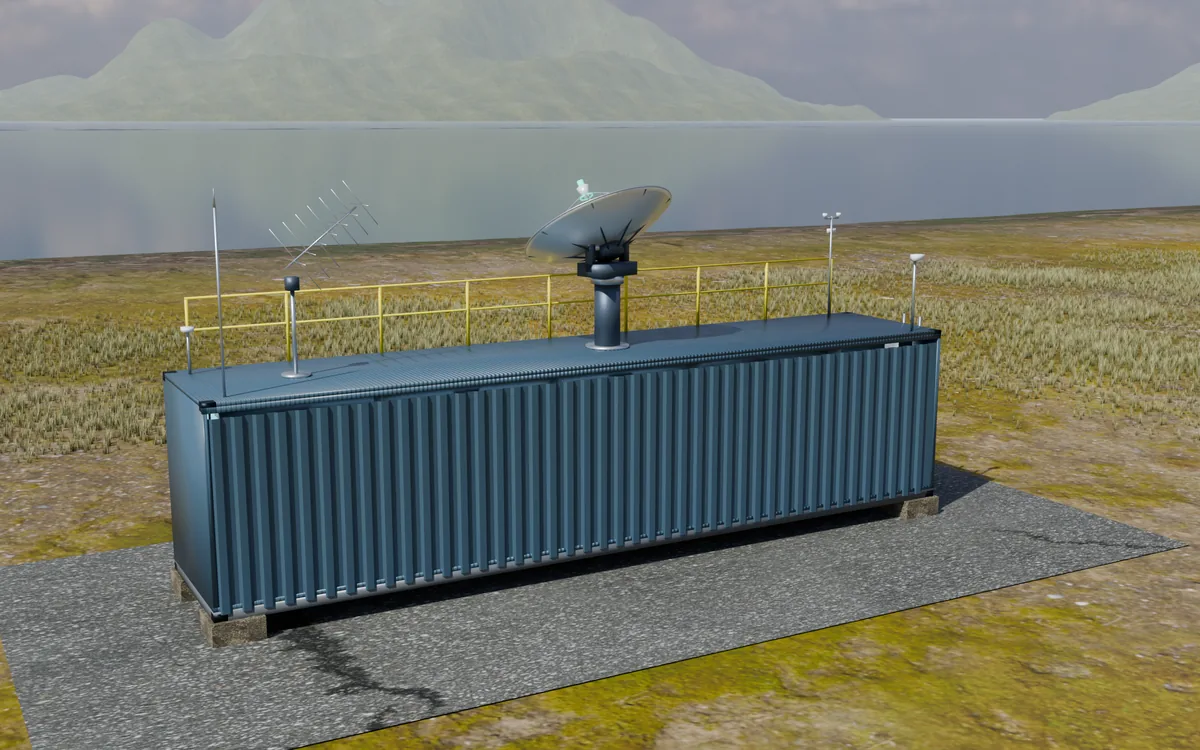
Rendering: single tracking dish First unit
Single tracking dish
- 2.4 m S/X tracking dish that works one satellite per pass and folds for transit
- UHF/VHF crossed yagi on its own rotator for cubesat TT&C
- UHF
- S
- X
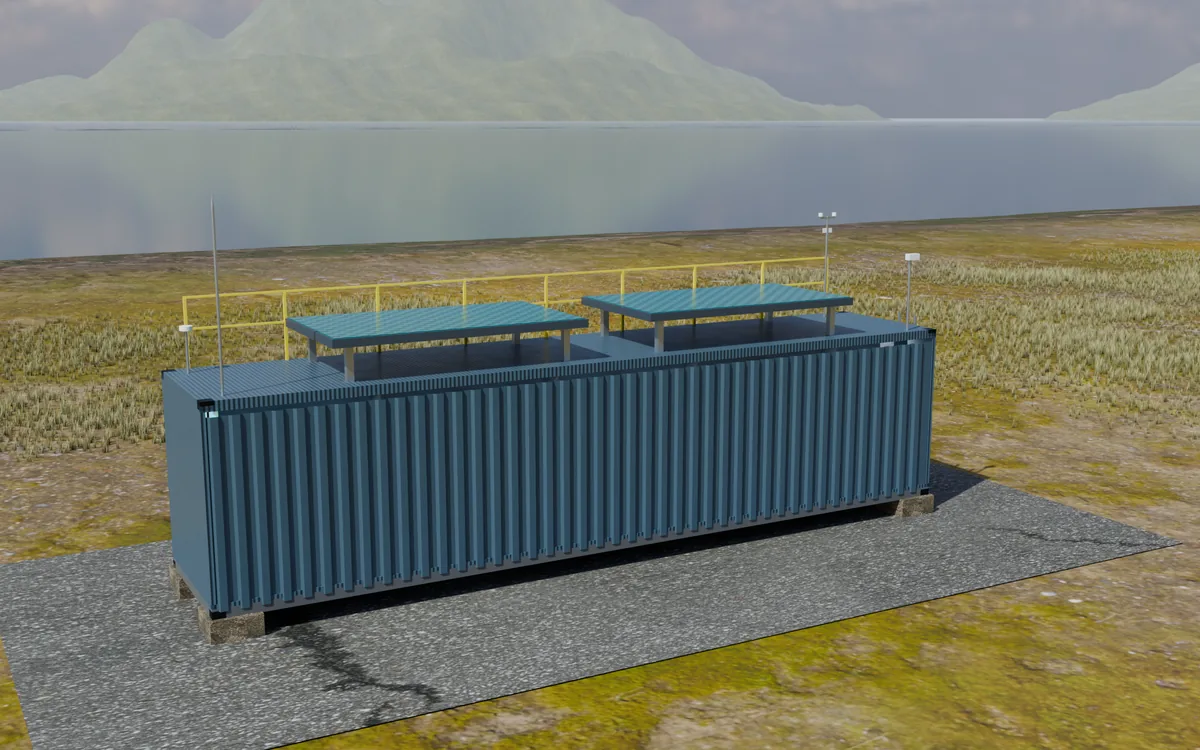
Rendering: phased-array primary aperture Core unit
Phased-array primary aperture
- Dual phased-array panels on posts above the roof
- Multi-beam, with no moving parts
- Panels fold flat for transit
- UHF
- S
- X
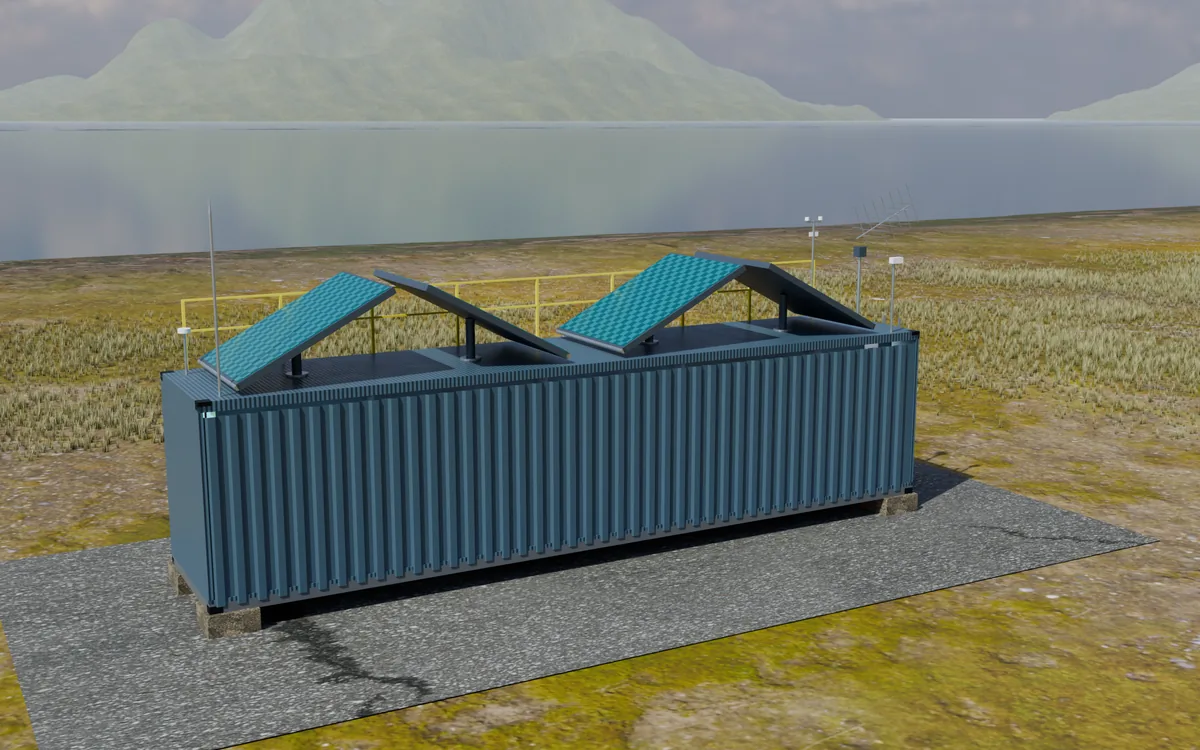
Rendering: multi-beam phased arrays Max satellites
Multi-beam phased arrays
- Four S/X phased-array panels tilted north, south, east and west, plus UHF
- Several beams per panel: built for breadth of contact
- Panels fold flat for transit
- UHF
- S
- X
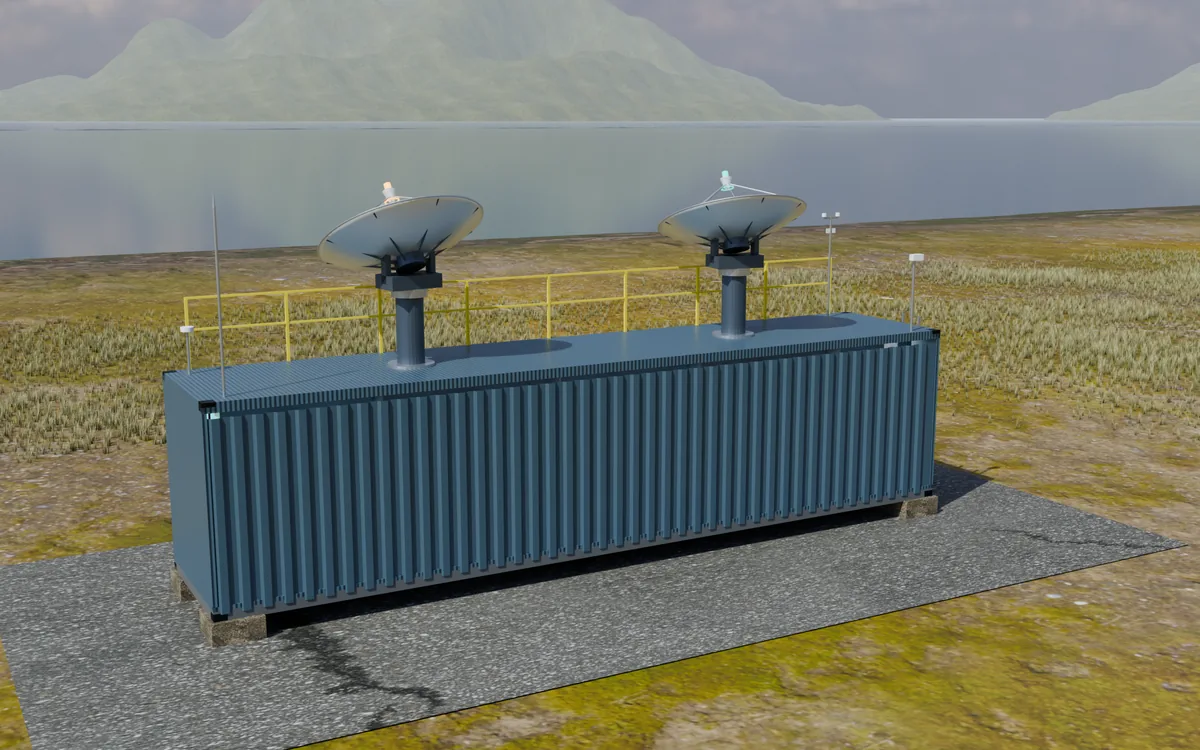
Rendering: Ka + X high-rate dishes Max throughput
Ka + X high-rate dishes
- A 2.4 m Ka dish and a 2.4 m S/X dual-polarisation dish
- Built for raw downlink capacity for earth-observation operators
- S
- X
- Ka
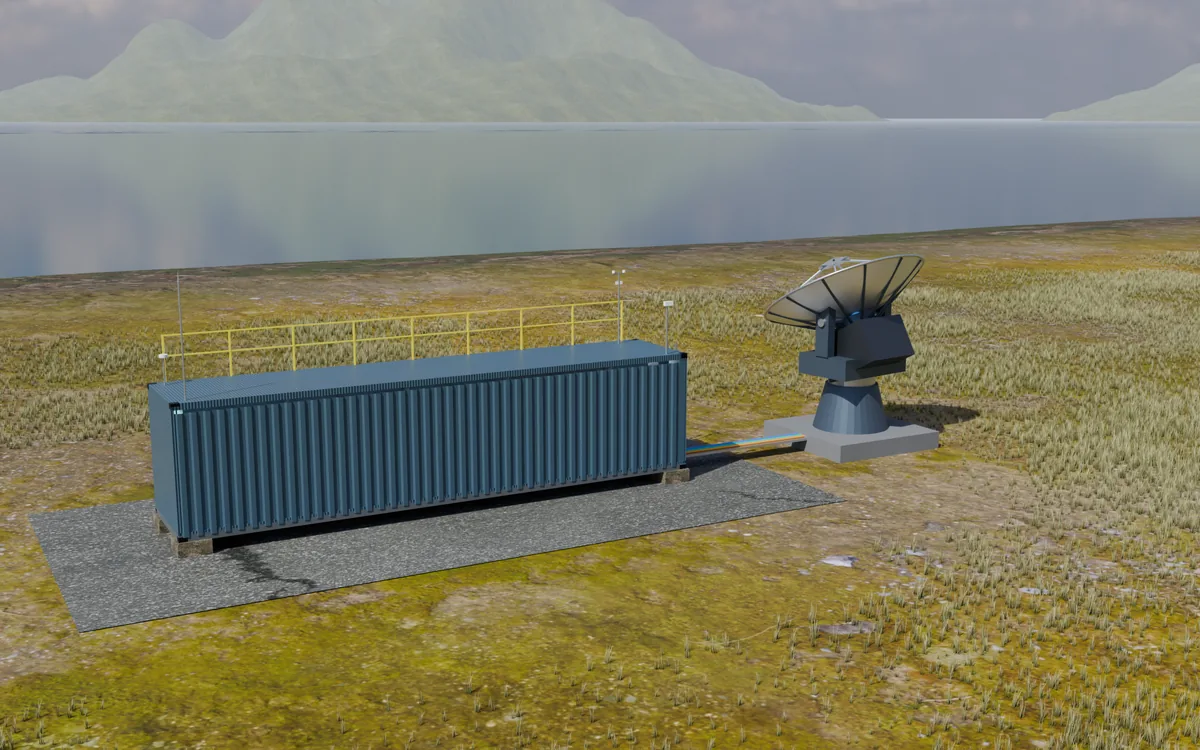
Rendering: 4.5 m ground-mounted dish GEO/MEO · 4.5 m
Ground-mounted dish
- 4.5 m dish on its own foundation beyond the container end
- Cassegrain feed cluster for S, X, Ku, Ka and L-band receive
- HPAs, LNAs and converters at the feed; power, RF and fibre back to the container by duct
- S
- X
- Ku
- Ka
- L rx
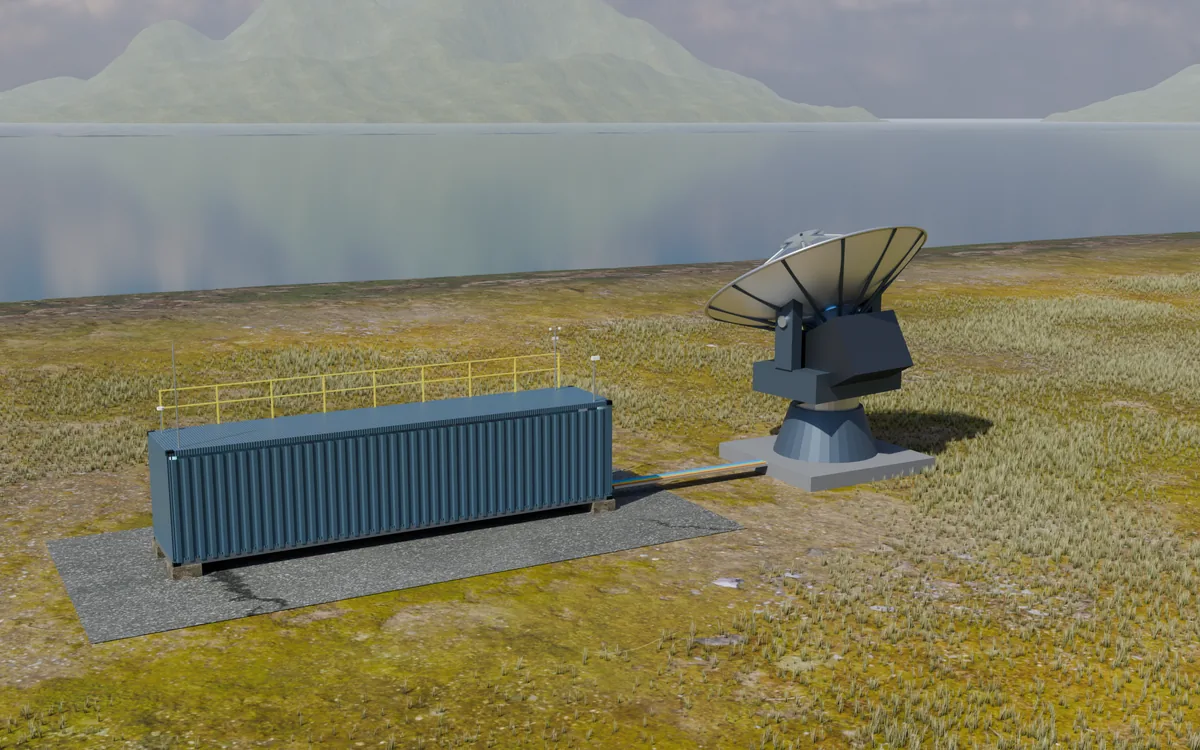
Rendering: 7.3 m ground-mounted dish GEO/MEO · 7.3 m
Ground-mounted dish
- 7.3 m dish on its own foundation beyond the container end
- Cassegrain feed cluster for S, X, Ku, Ka and L-band receive
- HPAs, LNAs and converters at the feed; power, RF and fibre back to the container by duct
- S
- X
- Ku
- Ka
- L rx